Integrating Design Thinking and Systemic Change: An Experimental Study on Methodological Innovation for Sustainable Workshops
Keywords:
Design Thinking, Systemic Change, Sustainable Communities, Participatory Methods, Methodological InnovationAbstract
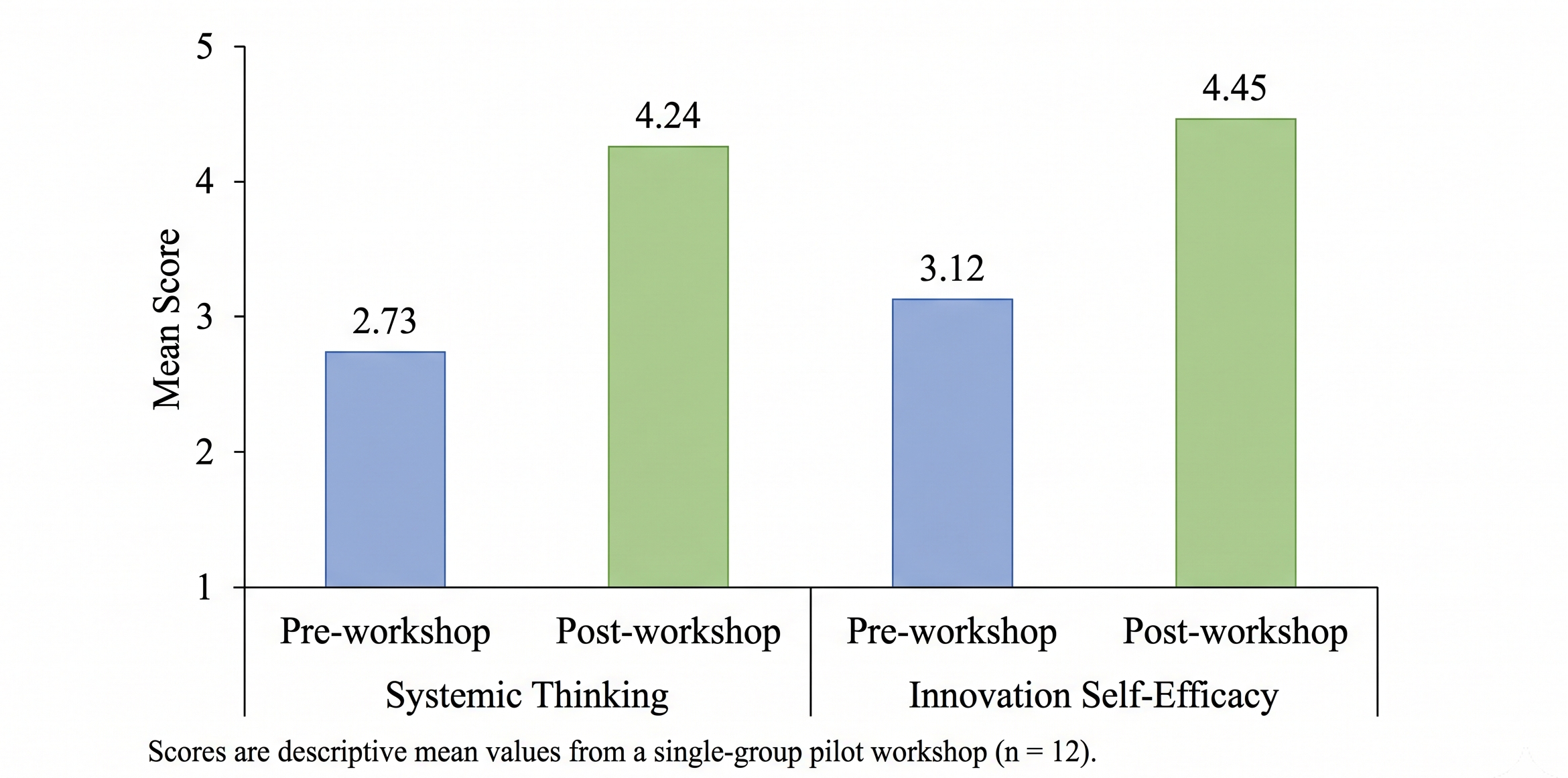
Urban communities are at the center of the world-wide shift to sustainability. Nonetheless, due to their sophisticated stakeholder networks and strong behavioral tendencies, they tend to hinder the achievement of the desired changes. The current approaches to community involvement largely concern the treatment of individual issues, without any overall model to inform systemic innovation. Therefore, interventions are often not capable of overcoming structural impediments. In order to overcome this gap, this paper presents a low-cost and repeatable workshop methodology, namely the Sys-Design framework, which combines the concepts of Design Thinking and Systemic Change theories. Using a Participatory Action Research (PAR) paradigm, the methodology was tried in an urban low-carbon transition workshop under normal community settings. Rather than depending on the resource-intensive controlled experiment, the paper took a pre-post descriptive evaluation of a single group that involved short self-report questionnaires, facilitator field notes, and participant reflection sheets, as well as a transparent output-scoring rubric. The workshop had a total of twelve participants who were drawn based on their background in resident, social organization, and grassroots management. The descriptive findings indicated that there was a significant improvement in participants self-reports of systemic thinking abilities and innovation self-efficacy, and the workshop produced 53 innovative ideas and 6 feasible community action plans. The major theoretical contribution of this paper is to clarify the synergistic mechanism of the divergent-convergent creative process of Design Thinking and the goal-pathway analytical framework of Systemic Change. This paper offers community managers, urban planners, and sustainability practitioners with a practical, low-cost, and replicable methodological toolkit to show how thoughtfully constructed participatory processes can turn diverse sources of community energy into constructive momentum towards systemic transformation.