Constructing a Sustainable Innovation System for Green Transformation: A Synergistic Framework of Resource Orchestration and Organizational Resilience
Keywords:
green transformation, sustainable innovation, resource orchestration, organizational resilience, substantive green innovation, PLS-SEMAbstract
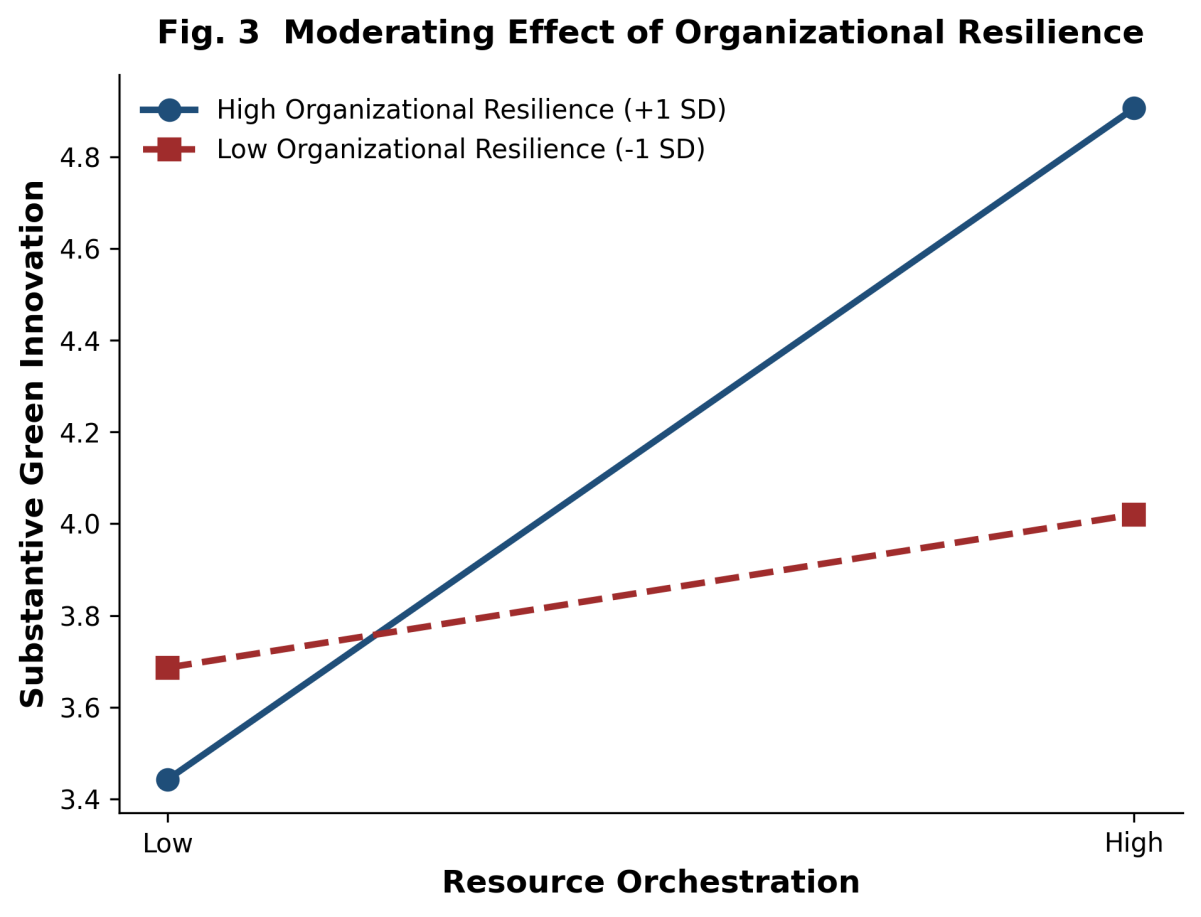
Green transformation has become a key pathway for manufacturing firms to achieve sustainable development. Drawing on resource orchestration theory and dynamic capabilities theory, this study develops a research model linking resource orchestration, substantive green innovation, organizational resilience, and firm performance. A survey-based quantitative design was adopted, and questionnaire data from senior and middle managers of Chinese manufacturing listed firms were matched with publicly available green patent and financial indicators. Based on 312 firm-level observations, partial least squares structural equation modeling (PLS-SEM) was used to test the proposed relationships. The results suggest that resource orchestration is positively associated with substantive green innovation, which is further associated with environmental and financial performance. Substantive green innovation also serves as a mediating mechanism between resource orchestration and firm performance, while organizational resilience strengthens the relationship between resource orchestration and substantive green innovation. The findings provide empirical evidence for understanding how dynamic resource management and organizational resilience support sustainable innovation and green transformation in manufacturing firms.