Inclusive Public Transit Design: Differentiated Crowding Perception Optimization and Social Equity Enhancement
Keywords:
Inclusive Design; Public Transport; Crowding Perception; Social Equity; Dynamic Traffic AssignmentAbstract
Urban public transport systems are facing growing challenges related to crowding. Despite extensive research on this issue, most studies fail to consider how different social groups experience crowding in distinct ways. In particular, the subjective perceptions of vulnerable populations are often overlooked, resulting in service designs that fall short of social equity goals. To address this gap, this paper proposes a multi-objective dynamic traffic assignment model that extends classical dynamic equilibrium assignment theory by incorporating a crowding perception function reflecting passenger heterogeneity, alongside a social equity evaluation metric.
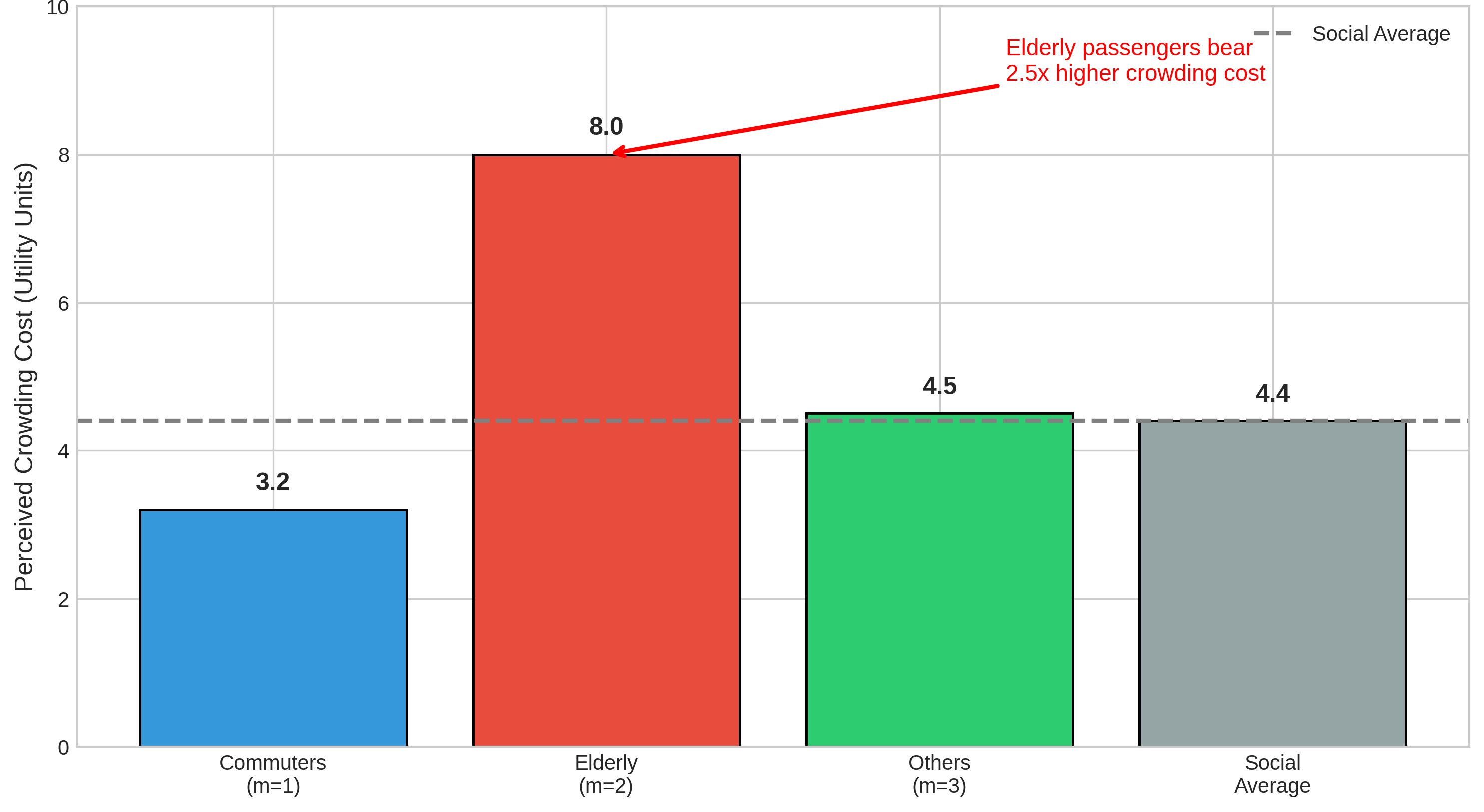
Using a public transport corridor as a reproducible case study, the model integrates publicly available timetable and capacity data with a low-cost online passenger survey and a transparent synthetic demand generation process. This framework enables the simulation of travel behavior and crowding perceptions across different passenger groups, including commuters, older adults, and people with disabilities. The results show that vulnerable groups are considerably more sensitive to crowding and experience a disproportionately high level of crowding-related disutility under current operational conditions.
The findings further demonstrate that targeted interventions, such as differential pricing schemes and service frequency optimization, can substantially improve equity in crowding exposure while simultaneously enhancing overall system performance. This study introduces a novel optimization framework and decision-support tool for public transport planning and operations, offering valuable insights for developing more inclusive and equitable urban mobility systems and improving travel well-being for all users.