A Data-Driven Sustainable Product Design Process: An End-to-End Design Method Coupling BPR and Multi-Objective Optimization
Keywords:
Business Process Reengineering (BPR); Sustainable Design; Multi-Objective Optimization (MOO); Data-Driven Design; End-to-End ProcessAbstract
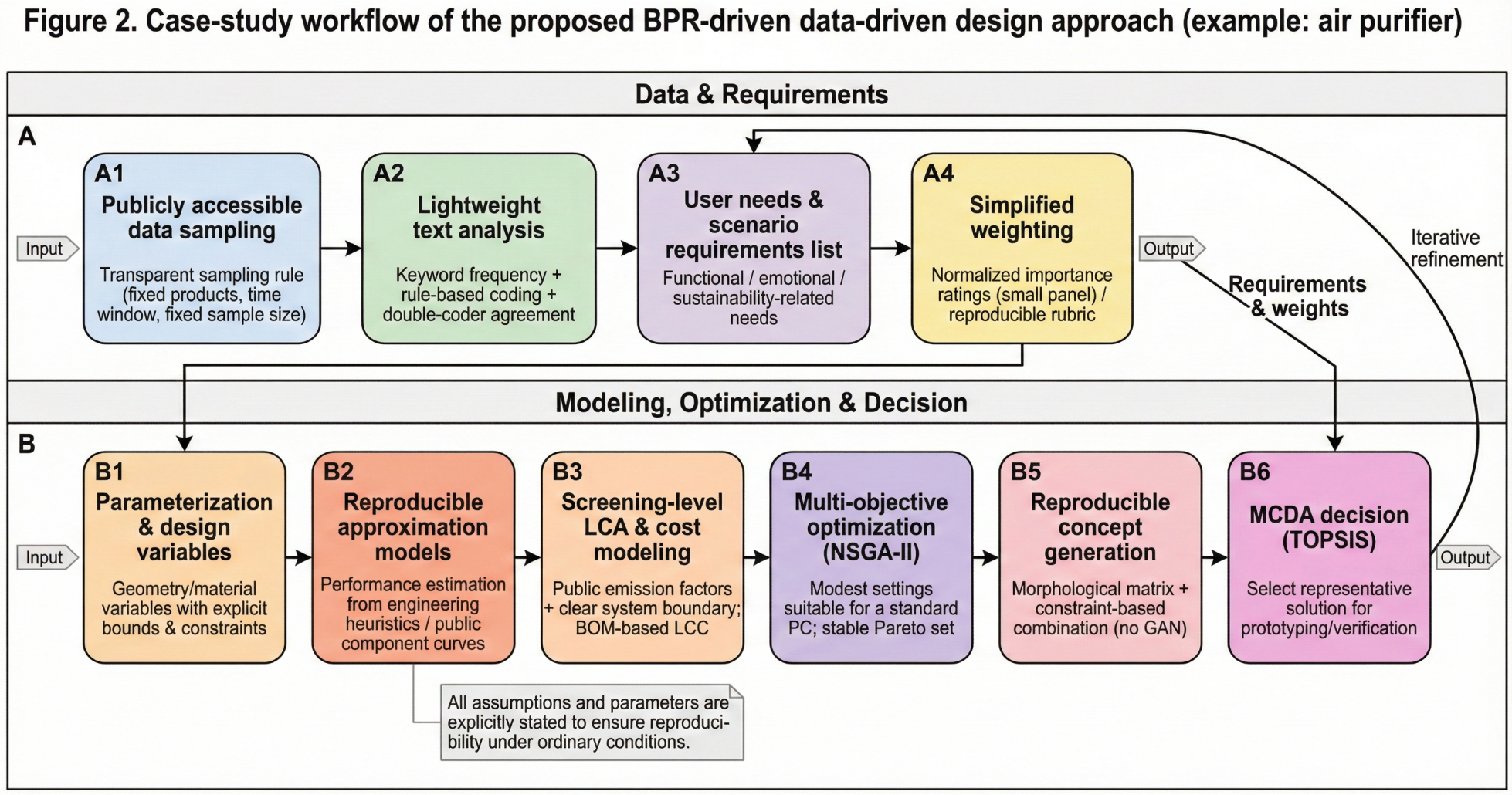
Traditional product design methods tend to follow a rigid, step-by-step structure. While systematic, this linear and phase-based approach often leads to inefficiencies, conflicting priorities, and limited capacity for true innovation—especially when facing the growing demands of sustainable development. Although previous studies have explored areas such as sustainable design, Business Process Reengineering (BPR), and Multi-Objective Optimization (MOO) individually, there is still no comprehensive end-to-end framework that effectively integrates these theories into a unified design methodology. To bridge this gap, this paper introduces an innovative end-to-end sustainable product design approach that combines BPR and MOO into a cohesive system. Built around data as the central driving force, the method establishes a six-stage closed-loop process: Scene Implantation, Requirement Analysis, Function Definition, Structure Optimization, Form Innovation, and Material Selection. Within this structure, BPR is applied to fundamentally restructure and optimize the overall design process at a macro level. Meanwhile, MOO—specifically through the NSGA-II algorithm—is implemented at key decision points to balance and optimize multiple conflicting objectives, such as performance, cost, and environmental impact. A practical case study involving the design of a smart air purifier validates the effectiveness of this approach. The results show that the method successfully identifies a Pareto optimal solution set across competing objectives, increases overall design efficiency by approximately 25%, and has the potential to reduce the product’s total environmental impact by around 15%. Ultimately, this research delivers a structured and actionable end-to-end solution for sustainable product design. It supports the digital and intelligent evolution of design processes while offering both theoretical insight and practical value for companies striving to balance economic performance, social responsibility, and environmental sustainability in an increasingly complex market landscape.