Behavior-Driven Intelligent Healthy Food Dashboard: Design Optimization and Behavioral Intervention Model Development
Keywords:
Behavioral Intervention; Intelligent Recommendation System; User Interface Design; Personalized Nutrition; Data VisualizationAbstract
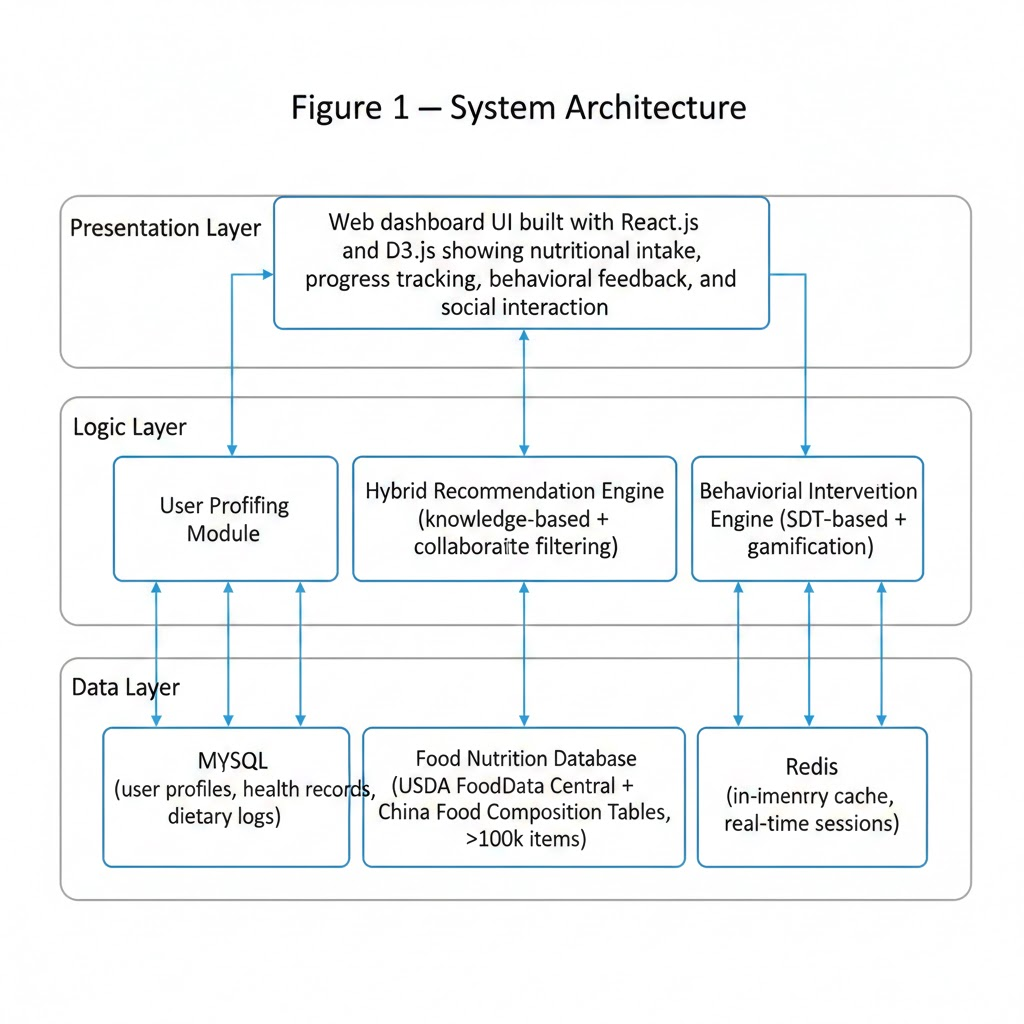
The global rise in non-communicable diseases (NCDs), largely driven by unhealthy dietary behaviors, presents a critical public health challenge. Although digital health tools for nutrition management have proliferated, many remain ineffective in supporting long-term dietary behavior change due to limited personalization and insufficient behavioral intervention mechanisms. To address these shortcomings, this study presents the design, development, and validation of a behavior-driven intelligent healthy food dashboard, which establishes a closed-loop intervention model by integrating personalized nutritional recommendations, behavioral science principles, and data-driven feedback to support sustained healthy eating habits.The proposed system employs a hybrid recommendation engine that combines knowledge-based filtering with collaborative filtering to generate precision-tailored food recommendations. Its behavioral intervention module is grounded in Self-Determination Theory (SDT) and informs the design of motivation-enhancing features such as goal setting, real-time progress feedback, and achievement-based incentives. The system’s effectiveness was evaluated through a 12-week randomized controlled trial (RCT) involving 200 participants, comparing dietary outcomes and user engagement between an intervention group and a control group.Results indicate that participants using the system achieved a statistically significant 45% increase in the Healthy Food Selection Rate (HS_Rate, defined as the proportion of caloric intake derived from healthy foods; p < .001), along with a 30% improvement in overall nutrient intake balance. The platform also demonstrated strong user engagement, maintaining a daily active user (DAU) rate of 55% and achieving a high System Usability Scale (SUS) score of 88.5.From an engineering perspective, this study delivers a validated technical framework for developing more effective digital health interventions. The findings confirm that integrating behavioral science with intelligent recommendation systems offers a promising approach to promoting sustained healthy eating behaviors, providing a solid foundation for future clinical deployment and commercial applications.