An Ecological Sensitivity Design Framework: Optimizing Resident Behavior and Balancing Resources in Crowded Tourism Environments
Keywords:
Ecological Sensitivity Design, Tourism Crowding; Resident Behavior, Resource Balance, System Design, Nudge Theory, Multi-Criteria Decision Analysis (MCDA)Abstract
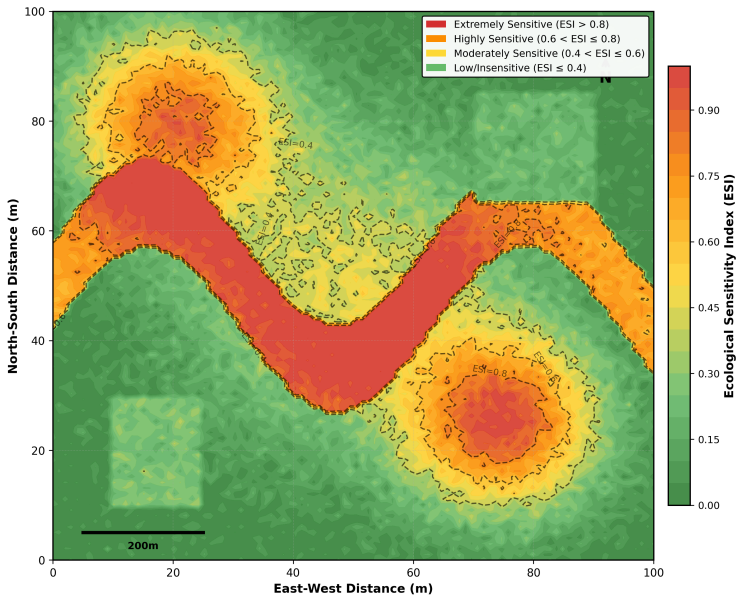
Background and Gap: Rapid growth in international tourism has contributed to “overtourism,” placing heavy pressure on local ecosystems in many destinations. Existing management is often reactive and lacks systematic, forward-looking measures. This study addresses how low-barrier, publicly available, or on-site data can be used to identify ecologically sensitive zones in a crowded historic town. It also examines whether combining multiple low-cost nudges can encourage more sustainable behavior among residents, with the goal of producing actionable guidance for resource allocation.Methodology: We adopted a systematic design and mixed-methods approach to develop an Ecological Sensitivity Design Framework built on three components: ecological sensitivity assessment (ESA), quasi-experimental nudge interventions, and Multi-Criteria Decision Analysis (MCDA). Importantly, the framework avoids expensive or high-tech data sources—such as mobile signaling or remote sensing—to improve accessibility, replicability, and real-world applicability.Implementation in Practice: A typical ancient water town in China’s Jiangnan region served as the case site. We integrated publicly available visitor data, on-site observation records, and a stratified resident survey (N=120). The framework was validated through (1) spatial pattern analysis of ecological sensitivity, (2) quasi-experimental comparisons of resident behavior under different nudge-based design strategies, and (3) a reproducible MCDA process to support resource allocation decisions.Key Findings:Combining ESA with public-data-based visitor hotspot analysis enables accurate identification of priority spatial nodes for optimization.A composite nudge package—blending informational, economic, and environmental cues—shows a clear synergistic effect in promoting residents’ sustainable behaviors.The MCDA approach effectively supports higher-order trade-offs, balancing tourism income, ecological footprint, and resident satisfaction.Significance: The proposed framework functions as a lightweight, deployable decision-support tool that helps destinations move from passive crowd control to proactive ecosystem coordination. It offers meaningful theoretical and practical value for tourist sites worldwide.