Behavioral Closed-Loop Design in Digital Ecosystems: Cross-Platform Environmental Information Integration and Collaborative Path Optimization
Keywords:
Behavioral Closed-Loop, Cross-Platform Integration, Environmental Information, Digital Ecosystem, Collaborative Optimization, Sustainable BehaviorAbstract
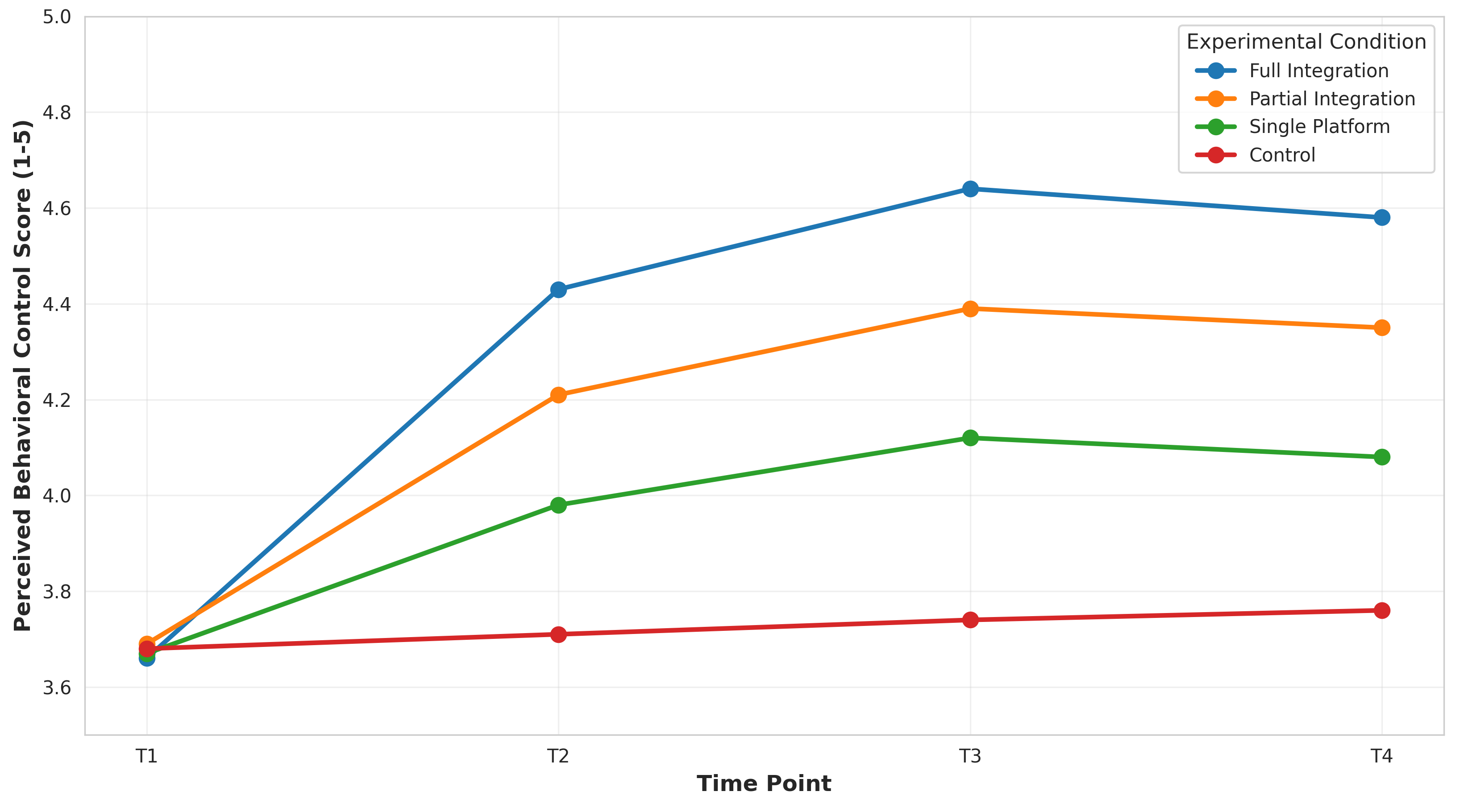
Background and Current Research Gaps: Environmental information is often scattered across multiple digital platforms, which weakens users’ ability to form consistent sustainable habits. Prior work has mainly focused on how information is delivered within single, isolated platforms, and has paid less attention to how coordination across platforms might strengthen behavior change. As users switch between different digital services, environmental messages often become less consistent and less personalized, reducing the overall effectiveness of interventions.Methodology and Implementation: This study designed a long-term intervention that created a closed-loop behavioral system within an integrated digital environment spanning e-commerce, social media, and content platforms. The system combined three functions—information aggregation, behavior monitoring, and feedback refinement. Personalization was supported by a low-threshold collaborative filtering algorithm for tailored content delivery, while adaptive feedback was implemented through a rule-based framework. Over 12 weeks, 1,248 participants were randomly assigned to one of four conditions: Fully Integrated (n=312), Partially Integrated (n=312), Single-Platform (n=312), or Control (n=312).Principal Results: The fully integrated group showed substantially stronger outcomes in environmental attitudes, behavioral intentions, and actual purchasing behavior than the other groups (F(3,1244)=42.18, p<0.001). Cross-platform integration increased the behavior-change effect by 133.9% (95% CI: 118.7%–149.1%) compared with single-platform intervention. Within the behavioral loop, feedback mechanisms significantly enhanced self-efficacy (β=0.521, p<0.001). Message consistency had the strongest association with sustained change (r=0.684, p<0.001). At a four-week follow-up, environmental attitudes remained largely stable, declining by only 5.6% (95% CI: 3.1%–8.1%).Significance and Contributions: This study provides one of the first systematic examinations of how cross-platform collaboration within digital ecosystems can drive behavior change. It offers both theoretical insights and practical guidance for designing systems that encourage sustainable consumption. The findings also inform digital interventions in related areas—such as environmental protection, health behavior, and social responsibility—highlighting strong academic and real-world value.