Healthy Food Dining Strategies: A Study Focusing on Consumer Psychology and Behavioral Economics
Keywords:
Digital Nudging, Behavioral Economics, Choice Architecture, Online Food Delivery, Healthy EatingAbstract
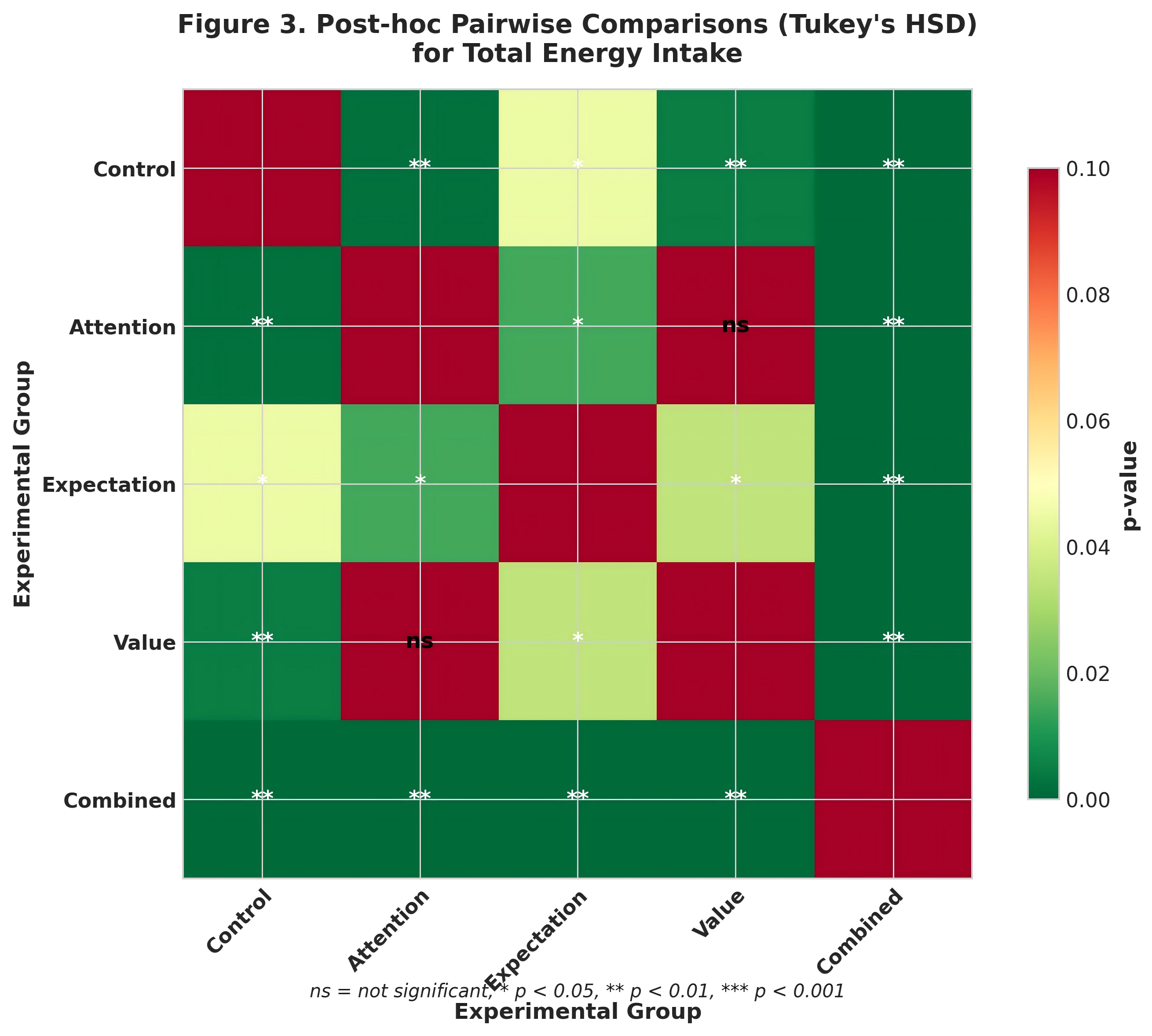
With the global proliferation of Online Food Delivery (OFD) platforms, their impact on public dietary structures has become increasingly significant. However, the complexity of the platform environment often leads consumers to make unhealthy choices. This study aims to apply classic theories from consumer psychology and behavioral economics to the digital context, constructing a systematic framework for healthy dining strategies. We propose a three-dimensional model encompassing "Digital Attention Guidance," "Multimodal Expectation Building," and "Dynamic Value Perception." The effectiveness of this model was tested through a simulated OFD platform randomized controlled trial involving 500 participants. The results indicate that a combined intervention integrating all three strategies was most effective, significantly reducing participants' mean total energy intake by 330 kcal (p < 0.001) compared to the control group, without compromising user satisfaction. Among single strategies, "Digital Attention Guidance" (e.g., optimizing default sorting) was the most efficient, while "Multimodal Expectation Building" (e.g., using high-quality images and descriptive language) played a key role in enhancing users' sensory expectations and satisfaction. This research confirms that by designing the digital choice architecture thoughtfully, OFD platforms can effectively "nudge" consumers toward healthier choices without harming business interests, providing empirical evidence and practical guidance for a win-win scenario between public health and commercial development.