From Data to Insight: Visualization Design Innovation and Integration of Data-Driven Decision Tools for Energy Transition
Keywords:
Energy Transition, Data Visualization, Decision Support Systems, Multi-Criteria Decision Analysis (MCDA), Visualization Design, Assessment IndexAbstract
The energy transition is a central challenge in addressing global climate change, yet its inherent complexity presents unprecedented difficulties for decision-makers at all levels. Existing decision-support tools tend to focus on isolated technical or economic indicators and often lack effective integration of multi-dimensional and heterogeneous data, systematic consideration of user interaction, and the in-depth use of visualization design as a cognitive enabler. As a result, decision-makers frequently struggle to efficiently and accurately extract critical insights from large and complex datasets.
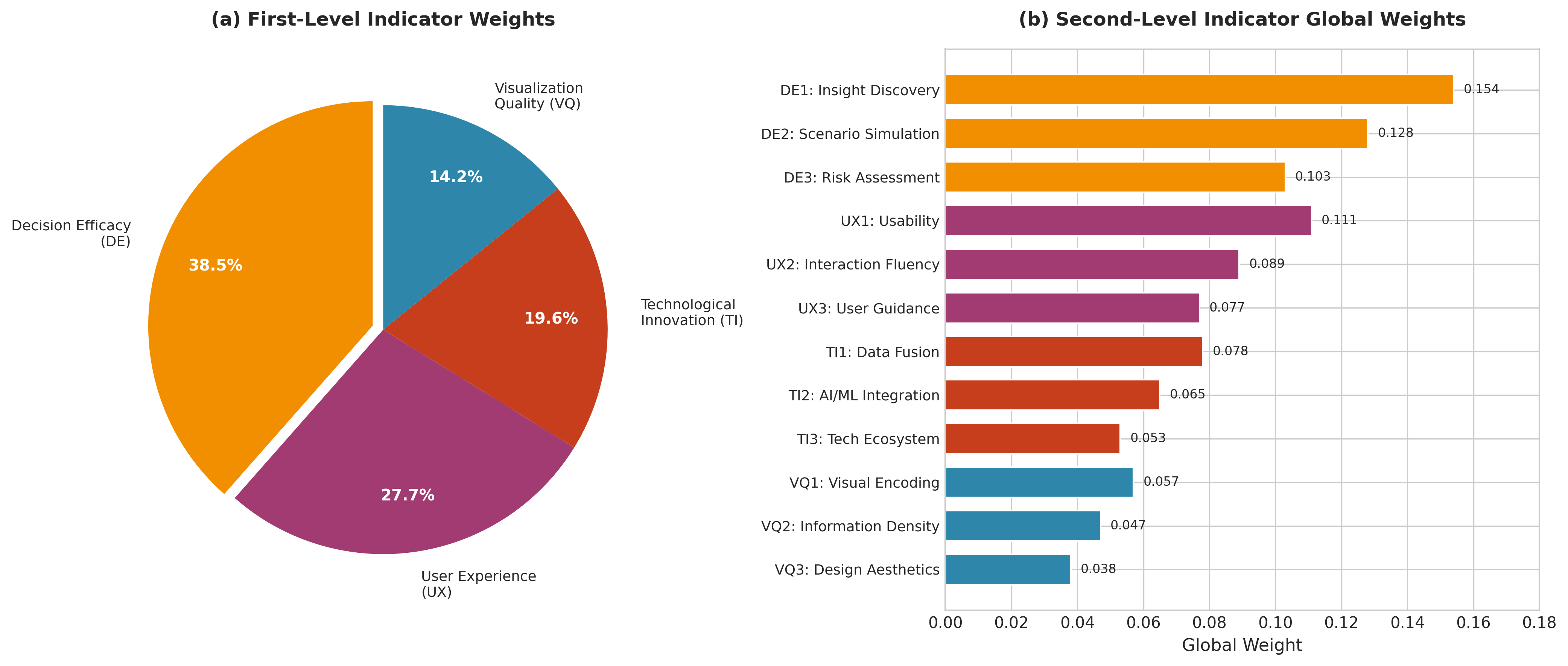
To address this gap, this study proposes a multi-criteria assessment framework that integrates visualization design innovation with data-driven decision-making. The framework combines the Analytic Hierarchy Process (AHP) to determine the weights of evaluation dimensions with the PROMETHEE II method to rank decision alternatives, thereby establishing a four-dimensional comprehensive evaluation system encompassing Visualization Quality, User Experience, Decision Efficacy, and Technological Innovation. The effectiveness and feasibility of the framework are validated through an empirical analysis of 15 representative countries, selected according to their energy structures, economic development levels, and degrees of digitalization.
The core finding of the study is that systematic innovation in visualization design can significantly enhance the efficiency, transparency, and overall quality of data-driven decision-making. Building on this insight, the study proposes a novel Energy Transition Visualization-based Decision Readiness Index (ET-VDRI). Through quantitative ranking and cluster analysis of the 15 countries, the framework clearly identifies the distinctive strengths and potential limitations of different nations in leveraging visualization tools to support energy transition decisions.
The value of this research lies in offering a new human-centered paradigm for the evaluation and design of decision-support tools aimed at energy policymakers, industry investors, and technology developers worldwide. By bridging the gap between raw data and actionable insight, the proposed framework promotes the development of more scientific, efficient, and inclusive tools for planning energy transition pathways, thereby contributing to the acceleration of global sustainable development.