Collaborative Optimization of Dynamic Pricing and Capacity Allocation in Public Transit Based on Reinforcement Learning
Keywords:
Public Transit, Dynamic Pricing, Capacity Allocation, Deep Reinforcement Learning, Proximal Policy Optimization, Social WelfareAbstract
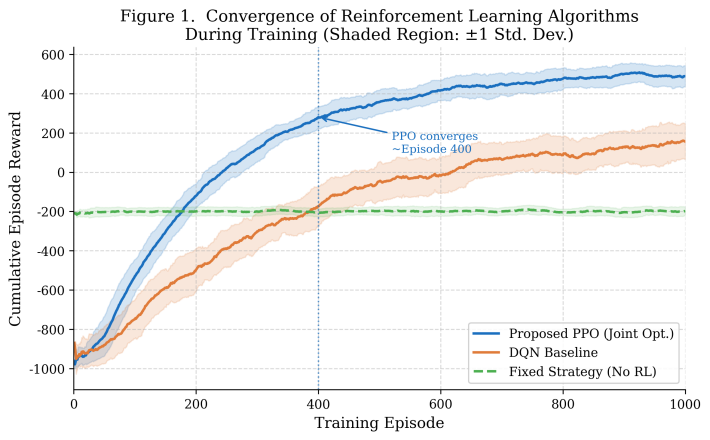
Urbanization is putting growing pressure on public transit systems, creating familiar problems like overcrowding during rush hours, underused services during quieter times, and rising operating costs. Traditional approaches—such as fixed pricing and static capacity planning—aren’t flexible enough to respond to constantly changing passenger demand. As a result, efficiency drops and overall social benefits are limited. While previous research has explored pricing or capacity decisions separately, it often overlooks how these two factors can work together, especially in complex, real-world environments. To tackle this, the study introduces a collaborative optimization framework built on the Proximal Policy Optimization (PPO) algorithm. It models the combined problem of dynamic pricing and capacity allocation as a Markov Decision Process (MDP), allowing both elements to be adjusted in coordination. A simulation environment is developed to test how well this approach performs under different demand conditions. The results show clear improvements. Compared to traditional fixed strategies and a Deep Q-Network (DQN) baseline, the PPO-based model does a better job of balancing supply and demand. It helps reduce overcrowding during peak times, makes better use of resources when demand is low, and improves overall social welfare—all while keeping operator revenue stable. Overall, this work moves beyond the limitations of static transit management. It offers a more flexible, data-driven way to make decisions in Intelligent Transportation Systems (ITS), expands how reinforcement learning can be applied in complex transit scenarios, and provides practical insights for making urban public transportation more efficient and responsive.