Structural Health Monitoring and Active Cooperative Control of Frame Structures for Rapid Post-Earthquake Restoration
关键词:
structural health monitoring, active cooperative control, rapid post-earthquake restoration, repairable steel frames, residual drift, digital twin摘要
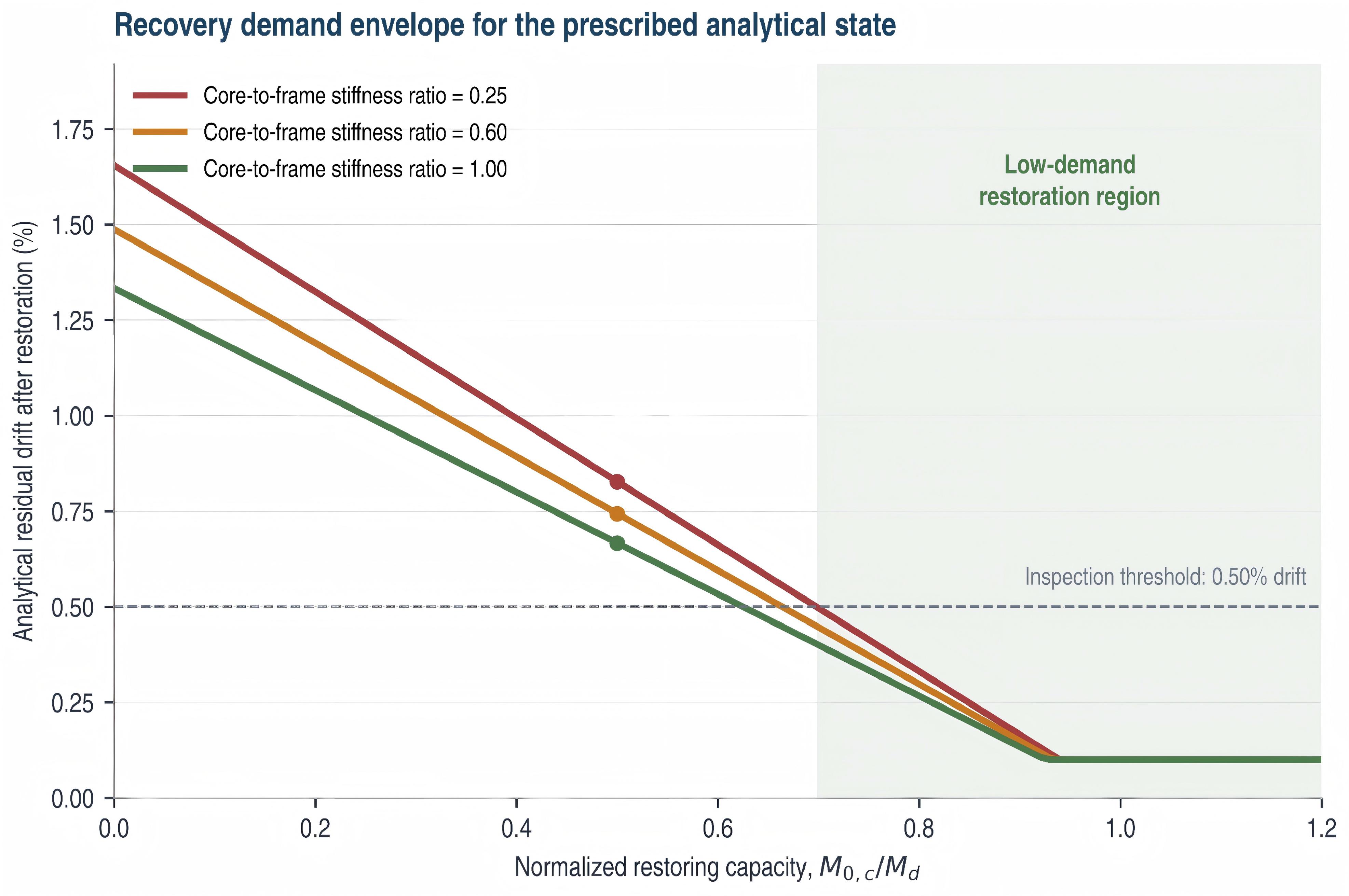
Rapid restoration after an earthquake depends on more than estimating whether a building avoided collapse. A usable decision process must distinguish residual deformation from repairable damage, integrate imperfect observations, and coordinate structural actions without displacing the responsible engineer’s inspection and safety-evaluation role. Existing structural health monitoring systems commonly diagnose response or damage after an event, whereas repairable-frame systems commonly localize damage or reduce residual drift. Active and semi-active control studies, in turn, usually optimize peak response during excitation. The operational link between these three capabilities remains under-specified. This paper develops an original, human-supervised framework that connects structural health monitoring, a repairable moment-frame/rocking-core configuration, and constrained cooperative restoration control for rapid post-earthquake recovery. The framework fuses protected-zone strain, acceleration, displacement, and tendon-force measurements into a state estimate; classifies the inferred state into inspection, recoverable-damage, or escalation states; and selects a governed sequence of fuse release, self-centering action, and limited actuation. A six-storey analytical benchmark is used solely to make the equations, decision logic, figures, and data files reproducible. It is not a field dataset, a physical test, or a claim of validated building performance. In the prescribed benchmark, the closed-form restoration demand falls from 1.19 MN·m with locked fuses to 0.41 MN·m after staged fuse release, and becomes zero after the specified cooperative sequence supplies sufficient core restoring capacity. The principal contribution is therefore methodological: a transparent interface between monitoring evidence, restoration actions, and human safety decisions. The paper also defines sensing, latency, uncertainty, actuator, and inspection constraints that must be satisfied before such a framework can progress from analytical design to real-time hybrid testing and field deployment.