Closed-Loop Design of Bioenergy Supply Chain: A Pathway to Efficient Resource Utilization from a Circular Economy Perspective
关键词:
Keywords—bioenergy; supply chain; closed-Loop design; circular economy; resource efficiency摘要
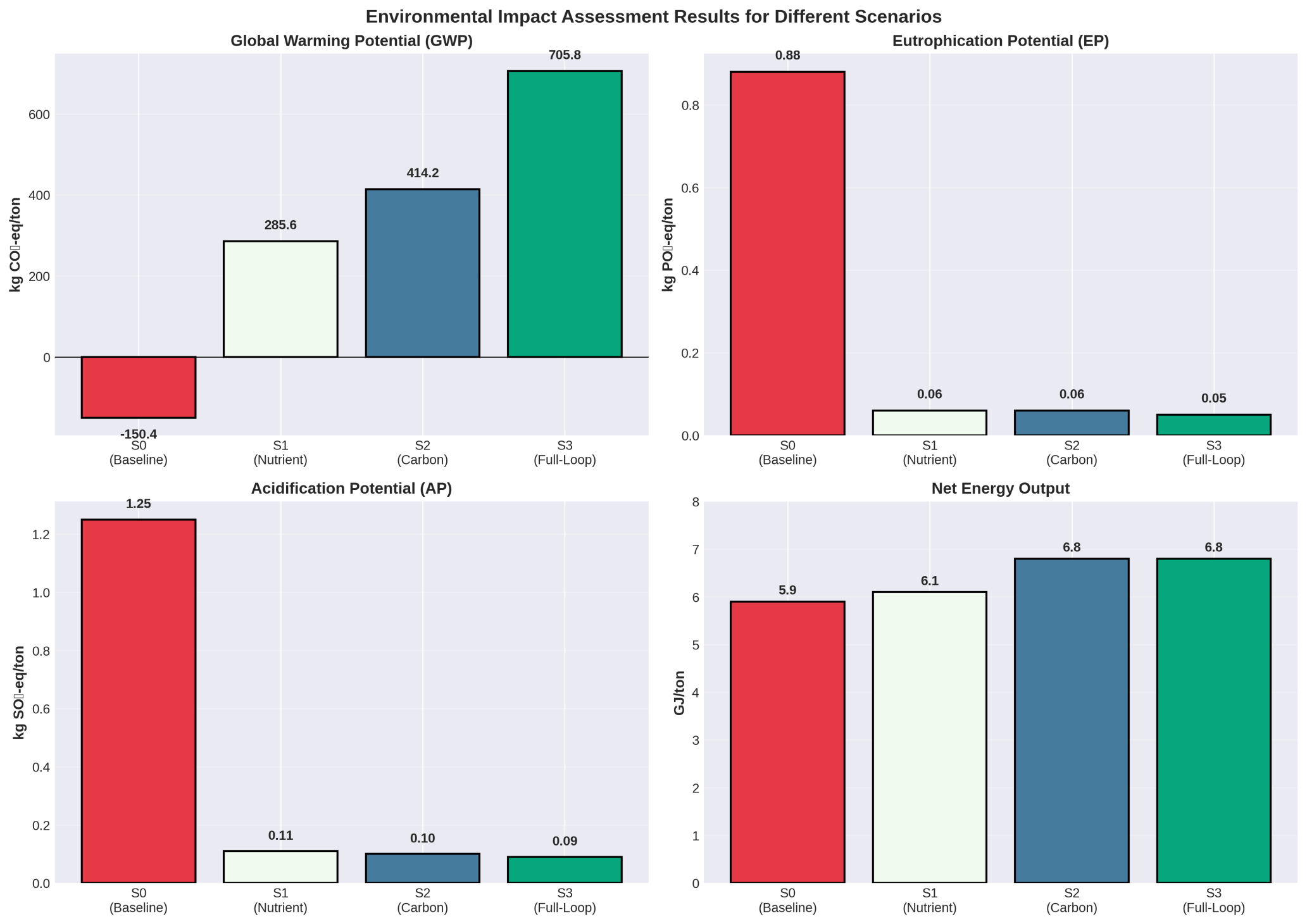
Conventional linear bioenergy systems are increasingly constrained by low resource efficiency and significant environmental burdens. To address these limitations, this study proposes a closed-loop bioenergy supply chain framework grounded in circular economy principles. By integrating multi-stage biomass conversion with waste valorization pathways, the framework establishes a synergistic “Feedstock–Energy–Product” ecosystem that maximizes resource utilization across the entire supply chain. To enable rigorous quantitative evaluation, an integrated Material Flow Analysis–Life Cycle Assessment–Techno-Economic Analysis (MFA–LCA–TEA) modeling approach was developed.A corn stover biorefinery was selected as a representative case study, and four evolutionary supply chain scenarios were simulated to assess system performance under increasing levels of circularity. The results indicate that the optimal closed-loop scenario substantially improved resource recovery efficiency, achieving recovery rates of 88.1% for carbon, 92.5% for nitrogen, and 95.8% for phosphorus. From an environmental perspective, the system transitioned into a net carbon sink, delivering a reduction of 705.8 kg CO₂-eq per ton of feedstock, while simultaneously lowering other environmental impact indicators. Economically, the integrated system achieved an internal rate of return (IRR) of 21.5%, driven primarily by the production of high-value co-products such as biochar and bio-based fertilizers, thereby demonstrating strong environmental–economic synergies.Overall, the findings confirm that supply chain circularity is a critical determinant of sustainable bioenergy development, and that multi-product biorefinery configurations are essential for achieving long-term economic viability. This study contributes a robust quantitative methodological framework for the systematic design, evaluation, and optimization of circular bioenergy systems, offering valuable insights for both policy formulation and industrial implementation.