Multi-level Health-Optimized Design: A Synergistic Path for Individual-Community-System in Sustainable Transportation Engineering
关键词:
Sustainable Transportation; Health-Optimized Design; Multi-level Framework; Built Environment; Structural Equation Modeling; Urban Planning摘要
With rapid global urbanization and growing expectations for a better quality of life, sustainable transportation has become a key concern in urban development. Yet, many current transportation engineering practices still focus mainly on efficiency and environmental performance, often overlooking residents’ physical and mental health in a systematic way. To address this gap, this study proposes an integrated framework called Multi-level Health-Optimized Design (MHOD), which explores how health benefits can be maximized simultaneously at the individual, community, and system levels within sustainable transportation engineering.
Grounded in the socio-ecological model and design science theory, the research develops a three-dimensional analytical framework that links individual healthy travel behaviors, health-supportive community built environments, and health-oriented urban transportation system governance. A large Chinese city is selected as a case study to empirically test the framework. By integrating multiple data sources—such as resident travel surveys, built environment indicators, and urban transportation policy documents—and applying Structural Equation Modeling (SEM), the study quantitatively examines the interactions among the three levels and their combined effects on residents’ health outcomes, including physical activity, chronic disease risk, and mental well-being.
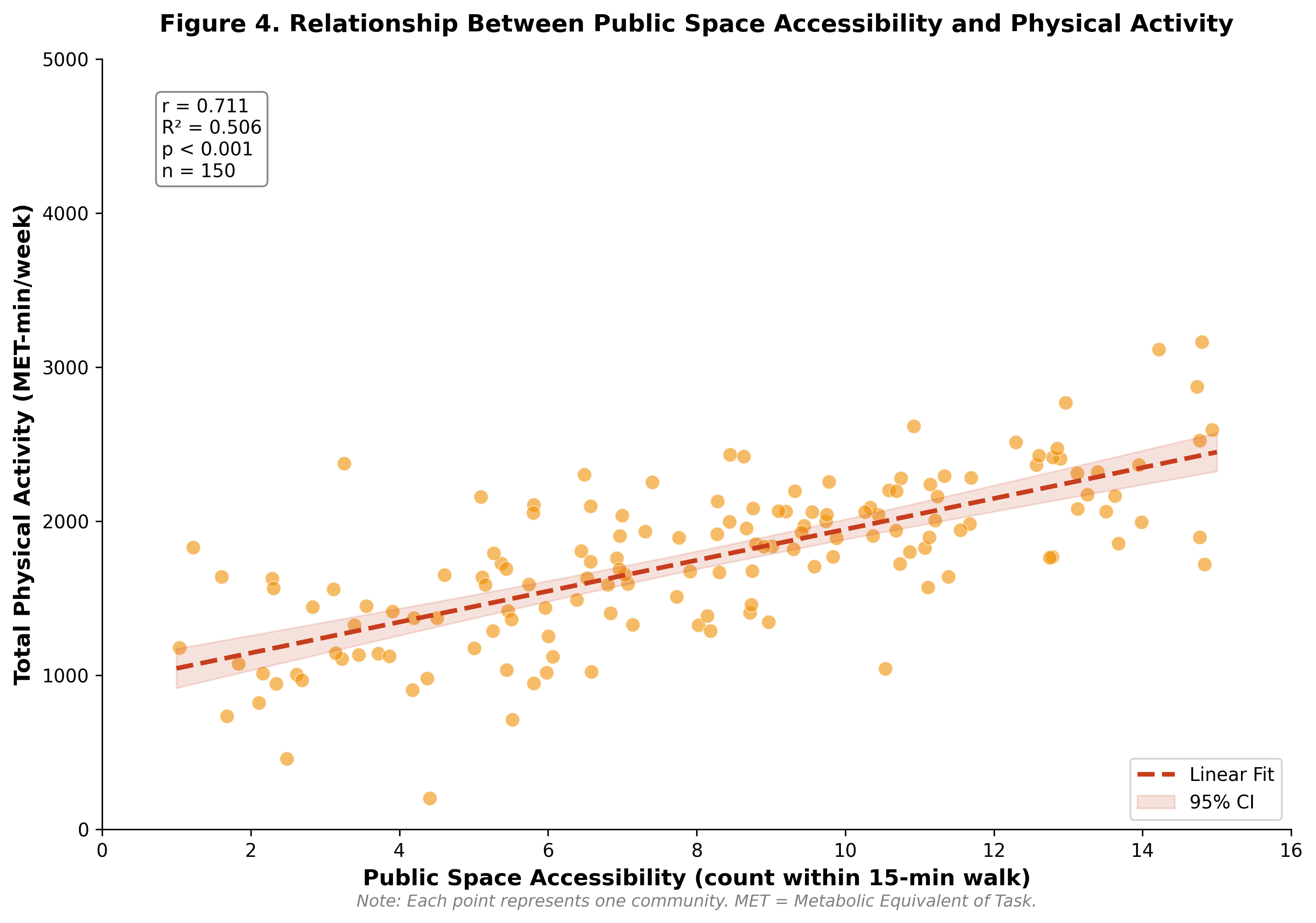
The findings reveal that the community-level built environment—particularly factors like walkability and access to public spaces—plays a pivotal mediating role between individual behavior and system-level policies. Health-oriented transportation policies at the system level can significantly improve public health outcomes by shaping healthier community environments, which in turn encourage individuals to adopt more active and health-conscious travel modes. Overall, the study highlights that embedding health objectives throughout the entire lifecycle of transportation planning, design, construction, and operation is essential for truly sustainable urban development.
This research offers urban transportation planners and policymakers a systematic design approach that balances efficiency with health considerations, while also providing strong theoretical and empirical support for advancing the “Healthy China” strategy within the urban transportation sector.