Climate Resilience Assessment of High-Density Urban Forms: A Comparative Method Based on Thermal Risk and Ventilation Corridors
关键词:
Climate Resilience, High-Density Cities, Urban Heat Island (UHI), Ventilation Corridors, Thermal Risk Assessment, Urban Morphology Comparison摘要
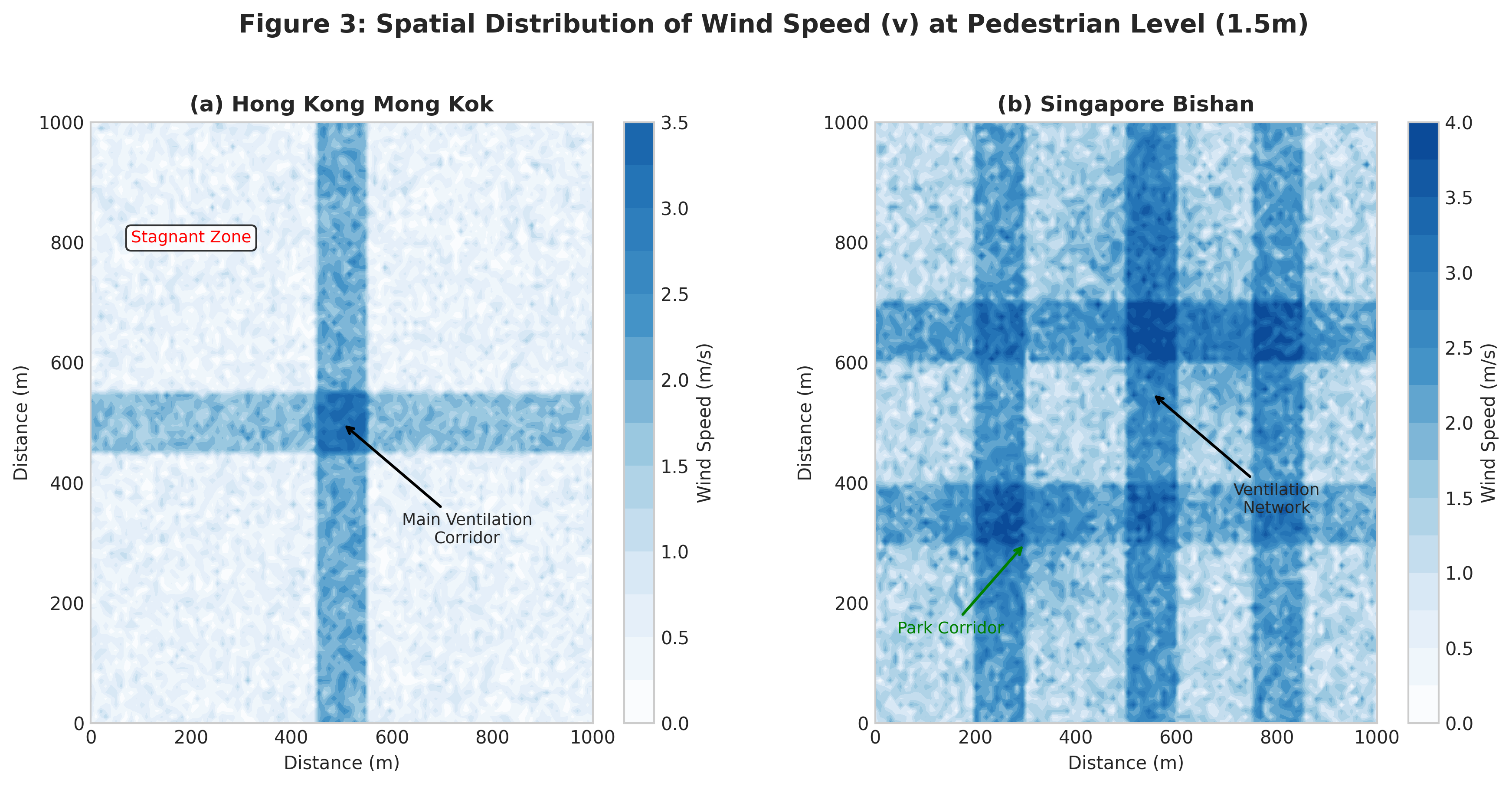
With the acceleration of global urbanization and the exacerbation of climate change, high-density cities face increasingly severe thermal environment challenges. The Urban Heat Island (UHI) effect and the frequent occurrence of extreme heat events pose a serious threat to resident health and sustainable urban development. Existing research has largely focused on the thermal effect analysis of single urban forms or the planning of ventilation corridors, lacking a systematic comparative assessment framework for the climate resilience performance of different high-density settlement patterns. This study aims to bridge this gap by proposing a comparative method for urban structures based on a coupled analysis of thermal risk and ventilation corridors to evaluate the climate resilience of different high-density urban forms. The research first establishes a multi-dimensional assessment framework that integrates thermal risk assessment (including exposure, sensitivity, and adaptive capacity) and ventilation potential analysis. Subsequently, two typical high-density urban forms—the compact high-rise model of Hong Kong and the Garden City model of Singapore—are selected as comparative cases. By using a simplified Computational Fluid Dynamics (CFD) simulation combined with accessible GIS data, this study estimates the thermal environment distribution and ventilation potential of the two forms under representative summer conditions. The results show that although the building densities of the two forms are similar, their climate resilience performance exhibits significant differences: the Garden City form, through its rational layout of green spaces and building spacing, creates a more efficient ventilation network, effectively reducing overall thermal risk. In contrast, while the compact high-rise form alleviates daytime high temperatures in localized areas through shading effects, it suffers from more prominent issues of nighttime heat accumulation, and its ventilation corridors are easily obstructed and interrupted by tall buildings. The conclusions of this study provide a scientific basis for high-density urban planning and design, emphasizing that while pursuing land-use efficiency, climate resilience must be adopted as a core design principle. By optimizing urban structure and spatial layout, it is possible to construct sustainable urban forms that are both compact and adaptive. This comparative methodological framework can also serve as a reference for similar assessments in other cities.